


Your kidneys work like filters for your body. They clean your blood and help maintain normal blood pressure. To do this job well, they need a steady supply of clean blood through special tubes called renal arteries. If you suffer from unexpected chest discomfort, consulting a Chest Pain Specialist in Pune or an experienced Heart Doctor in Pune early can help keep your heart and blood vessels healthy. Understanding What Is Renal Angioplasty? Understanding when treatment is needed for Renal Artery Narrowing can help you take timely action to protect your kidneys and overall health.
What Is Renal Artery Narrowing?
Renal Artery Narrowing happens when the main blood tubes leading to your kidneys become tight or blocked.
When less blood reaches the kidneys, they get confused. They think your whole body has low blood pressure. To fix this, the kidneys release strong signals that make your blood pressure jump very high.
The main causes of renal artery narrowing include:
- Fat buildup (Atherosclerosis): Sticky fat and cholesterol line the blood vessels. This is the most common cause in older adults.
- Muscle growth issues (Fibromuscular Dysplasia): Abnormal growth of tissue inside the artery wall. This is more common in younger women.
- Swelling or Inflammation: Rare conditions that cause the blood vessel walls to swell up.
To check your overall heart health, a leading Cardiologist in Pune may also recommend diagnostic evaluations such as a 2D Echo Test in Pune or a treadmill Stress Test in Pune.
What Is Renal Angioplasty?
If you are looking for the simple renal angioplasty meaning, it is a smooth, minor procedure used to open up blocked or narrowed kidney blood tubes.
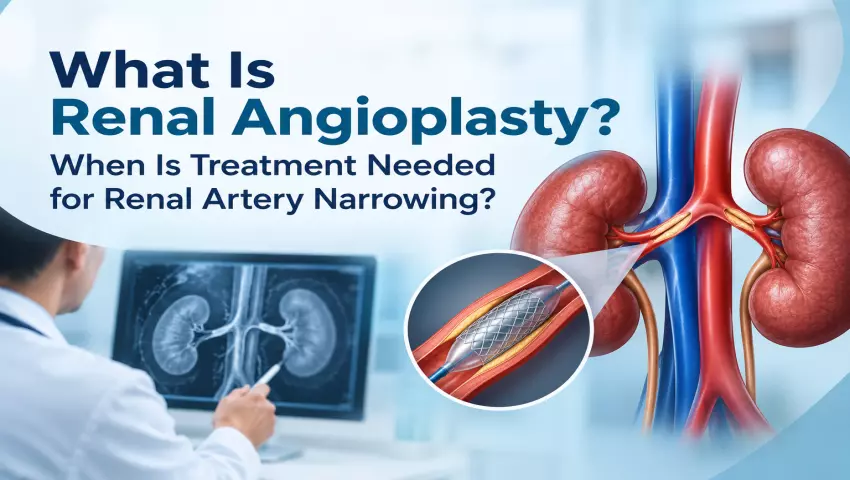
During this treatment, a doctor makes a very small opening, usually in the wrist or groin area. A very thin tube is guided through the blood vessel to the blocked spot. A tiny balloon at the tip expands to press the blockage open, allowing blood to flow freely again.
Symptoms of Renal Artery Narrowing:
In the early stages, you may not feel any pain or signs of trouble. But as the blockage gets worse, warning signs start to show.
Common renal artery narrowing symptoms include:
- Very high blood pressure that does not come down even with 3 or more medicines.
- High blood pressure that starts suddenly before age 30 or after age 55.
- Swelling in your legs, feet, or ankles due to fluid buildup.
- Unexpected loss of kidney function in blood tests.
- Sudden shortness of breath caused by fluid in the lungs.
If you suspect vascular issues, scheduling an Echocardiography In Pune can assist doctors in assessing blood circulation and overall cardiac wellness.
When Is Renal Angioplasty Needed?
Not every blockage needs a procedure right away. Doctors often try blood pressure medicines and simple health changes first.
Many patients ask: What Is Renal Angioplasty? When Is Treatment Needed for Renal Artery Narrowing? This procedure is required in these situations:
- Your high blood pressure remains dangerously high despite taking multiple daily medicines.
- Blood tests show that your kidneys are getting weaker due to poor blood flow.
- You experience repeated episodes of fluid buildup in your lungs or sudden heart stress.
- Both kidney arteries (or the only working kidney’s artery) are severely blocked.
In many cases, an initial Angiography in Pune helps doctors clearly visualize the blocked blood vessels before planning any correction.
How Is Renal Angioplasty Performed?
Here is what happens during the step-by-step renal angioplasty procedure:
- Numb the area: You receive medicine to stay calm, and local numb cream/injection is applied to your wrist or groin.
- Guide the tube: A soft, thin wire goes inside the blood vessel toward the kidney blockage.
- Check with picture: A harmless liquid is injected so the doctor can clearly see the blockage on an X-ray screen.
- Open the pathway: The small balloon expands to open the tight path, and a tiny metal mesh tube (called a stent) is placed to keep it wide open.
- Finish up: The balloon and wire are taken out, leaving the tiny mesh tube inside permanently.
Many patients worry and ask, ” Is renal angioplasty dangerous?
It is a very common, low-risk, and safe procedure. Minor issues like a small bruise at the entry spot can happen, but serious problems are rare when performed by an expert doctor. Similar to standard cardiac Angioplasty in Pune, patients generally experience smooth recovery and immediate health benefits.
If you want expert guidance in Maharashtra, you can consult an experienced Interventional Cardiologist in Pune like Dr. Kartik Bhosale (recognized by many as the Best Cardiologist in Pune). Dr. Kartik Bhosale is a top Interventional Cardiologist and a GOLD MEDALIST in Cardiology. He holds advanced degrees from KEM Hospital, Mumbai, and PGIMER, New Delhi, along with national board recognitions (MCSI, MNAMS, AMSCAI).
Recovery After Renal Angioplasty:
Healing after this procedure is fast and simple for most people:
- Short Stay: Most patients rest in the hospital for just 1 day for observation.
- Light Activity: You can walk soon after, but avoid lifting heavy objects for a few days.
- Daily Care: Taking prescribed blood-thinning pills keeps blood flowing smoothly through the new tube.
- Routine Checkups: Simple blood tests and pressure readings ensure your kidneys remain healthy.
If a patient also suffers from irregular heart rhythms alongside blood vessel disease, doctors may simultaneously evaluate whether advanced interventions like Pacemaker Implantation in Pune are needed to keep the heart functioning safely.
FAQs About Renal Angioplasty:
Yes. When kidneys get less blood, they release signals that squeeze blood vessels across your whole body. Consulting a Heart Specialist in Pune early helps manage this severe high blood pressure effectively.
Yes. Without enough blood and oxygen, kidney cells get damaged over time. Evaluating cardiac and vascular health with a Cardiologist in Pune ensures timely treatment before permanent kidney weakness occurs.
Most of the time, yes. The small metal tube (stent) ensures the artery stays wide open, similar to how vascular procedures like Angioplasty in Pune restore healthy blood flow in narrow vessels.
A renal artery stent is built to last for your entire lifetime. Regular checkups and diagnostic evaluations like a Stress Test in Pune help ensure overall blood circulation remains healthy.
It is rare, but sometimes tissue can slowly rebuild inside the stent. An experienced Interventional Cardiologist in Pune can monitor your recovery and conduct tests like Angiography in Pune if any symptoms return.
Conclusion:
Understanding What Is Renal Angioplasty? When Is Treatment Needed for Renal Artery Narrowing? is the first step toward preserving your health. Getting a timely Renal Angioplasty helps restore healthy blood flow, keeps stubborn high blood pressure under control, and protects your body from long-term damage. To receive expert evaluation and advanced vascular care, book an appointment with Dr. Kartik Bhosale today. You can visit Dr. Kartik Bhosale Cardiology Clinic to get personalized guidance for all your heart and blood vessel concerns.