

Breathing is something we do naturally every second. But what happens when taking a simple breath feels like heavy work? If you often feel breathless or tired for no clear reason, consulting the Best Cardiologist in Pune and learning about Pulmonary Hypertension: Symptoms, Causes, and Its Effect on the Heart can help you understand what your body is trying to tell you.
Understanding this heart and lung condition in simple words helps you take action early and keep your heart safe with guidance from an experienced Heart Doctor in Pune.
What Is Pulmonary Hypertension?
To understand the meaning of pulmonary hypertension, think of your blood vessels as simple water pipes.
Normally, blood flows easily from the right side of your heart into your lungs to pick up fresh oxygen.
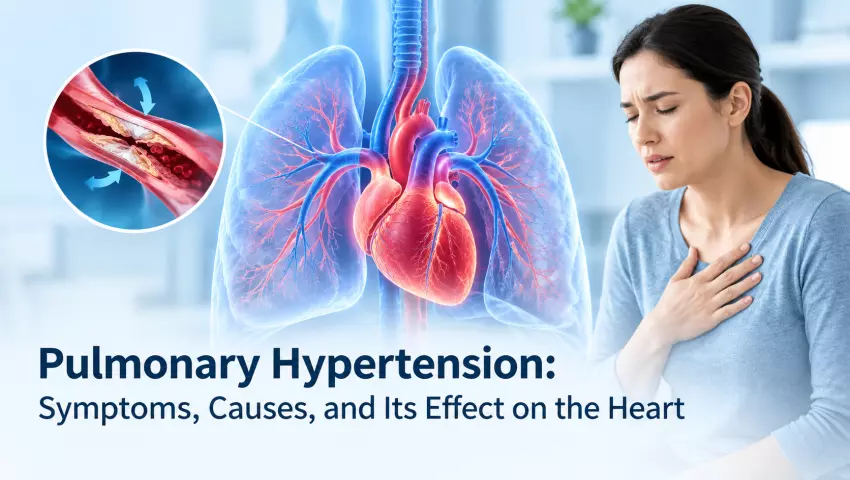
In pulmonary hypertension, the blood pipes in your lungs become narrow, stiff, or blocked. Because the passage is narrow, the blood pressure inside these lung arteries goes up. This forces your heart to push much harder to move blood through your lungs.
Causes of Pulmonary Hypertension:
There are several reasons why the blood vessels in the lungs become narrow over time. Knowing these pulmonary hypertension causes helps in early detection.
Main causes include:
- Existing Heart Problems: Weakness in the heart muscle or faulty heart valves.
- Lung Issues: Long-term lung diseases like COPD or asthma, and sleep disorders like sleep apnea.
- Old Blood Clots: Clots in the lungs that block normal blood flow.
- Family Genetics: A history of high lung pressure running in the family.
- Other Health Conditions: Joint and skin diseases like lupus, or liver illnesses.
Symptoms of Pulmonary Hypertension:
In the beginning, pulmonary hypertension symptoms are mild. Many people think they are just tired or out of shape. Over time, as the pressure builds up, body signals become clearer.
Look out for these warning signs:
- Unexplained breathlessness during simple activities like walking or climbing stairs
- Constant weakness and physical exhaustion
- Heavy chest discomfort (consult a Chest Pain Specialist in Pune immediately if chest discomfort persists)
- Dizziness or feeling like passing out
- Swelling in your feet, ankles, legs, or belly
- Bluish color on lips or skin
- Fast or irregular heartbeat
Pulmonary Hypertension: Effect on the Heart
Your heart and lungs work together. So, how does pulmonary hypertension affect the heart step by step?
- Extra Hard Work: Because lung arteries are tight, the right side of the heart has to pump much harder.
- Heart Muscle Thickens: Just like lifting heavy weights makes arm muscles bigger, the right heart muscle thickens to handle the pressure.
- Heart Becomes Weak: After pumping hard for a long time, the right heart muscle stretches out and loses its strength.
- Fluid Buildup: When the heart gets too weak to pump, fluid starts backing up into the body, causing legs and the belly to swell.
Diagnosis of Pulmonary Hypertension:
If an expert Cardiologist in Pune suspects high pressure in your lungs, they will perform a few simple medical tests to check your heart and lungs:
- 2D Echo Test in Pune: An ultrasound scan of your heart to measure blood pressure in the heart chambers and check overall heart function through Echocardiography in Pune.
- Stress Test in Pune: Helps assess how well your heart responds to physical activity.
- Chest X-ray & CT Scan: Pictures that show the shape and size of your heart and lungs.
- ECG (Electrocardiogram): A quick test that checks electrical heart rhythms.
- Right Heart Catheterization / Angiography in Pune: Specialized imaging and direct pressure measurement tests used by specialists to examine blood vessels and exact pressure inside your lung arteries.
Treatment of Pulmonary Hypertension:
While some types cannot be permanently cured, pulmonary hypertension treatment helps lower blood pressure in the lungs, reduces discomfort, and makes daily life easier.
Common treatment options include:
- Pulmonary Hypertension Medication: Medicines that relax tight blood vessels, clear extra fluid, and lower pressure.
- Oxygen Therapy: Providing extra oxygen to reduce strain on lungs and heart.
- Lifestyle & Advanced Care: Eating less salt to avoid swelling, getting proper rest, and managing associated heart conditions appropriately under medical supervision.
When to Consult a Cardiologist for Pulmonary Hypertension?
If you face continuous shortness of breath, chest tightness, or sudden leg swelling, you should consult a trusted Heart Specialist in Pune immediately to ensure your heart stays protected from long-term damage. Getting full clarity on Pulmonary Hypertension: Symptoms, Causes, and Its Effect on the Heart from an expert helps you manage the condition early and effectively. For specialized care, you can consult Dr. Kartik Bhosale, who is widely recognized as the Best Cardiologist in Pune. As a Gold Medalist and leading Interventional Cardiologist in Pune, he completed his MBBS from Seth G. S. Medical College and KEM Hospital, Mumbai, followed by MD Medicine and DM Cardiology from PGIMER, Dr. Ram Manohar Lohia Hospital, New Delhi, along with DrNB (Cardiology), and holds prestigious memberships in MCSI, MNAMS, and SCAI.
Frequently Asked Questions About Pulmonary Hypertension:
Yes, it is a serious medical condition. High pressure continuously stresses the heart, which can cause severe muscle weakness over time. If you experience persistent chest discomfort alongside high pressure, consulting a Chest Pain Specialist in Pune promptly can ensure timely diagnosis and management.
It depends on the underlying cause. If it stems from a treatable issue—such as chronic blood clots—specialized vascular care or Angiography in Pune can help evaluate blood flow and lower the pressure. In other cases, ongoing prescribed medications keep the condition under control.
Yes, many people lead fulfilling lives by taking their medications consistently, adopting heart-healthy habits, and maintaining routine check-ups with an experienced Heart Doctor in Pune to monitor their cardiac function.
Light activities like walking can be beneficial, but you must consult your doctor first. A qualified Cardiologist in Pune may recommend a Stress Test in Pune or evaluate your heart’s pumping capacity using Echocardiography in Pune before advising a safe activity level.
Without treatment, pressure inside the lung arteries can slowly increase over time. However, with modern medicines, proper lifestyle adjustments, and regular monitoring by an experienced Interventional Cardiologist in Pune, disease progression can be significantly slowed down to help you maintain a good quality of life.
Conclusion:
Understanding pulmonary hypertension, its basic causes, and its effect on the heart helps you make smart decisions for your health. Recognizing early body signals like breathlessness or tiredness can save your heart from heavy strain. If you or your family members experience these signs, book an appointment with Dr. Kartik Bhosale for personalized guidance and treatment. You can visit Dr. Kartik Bhosale Cardiology Clinic today to ensure your heart stays healthy and protected.