


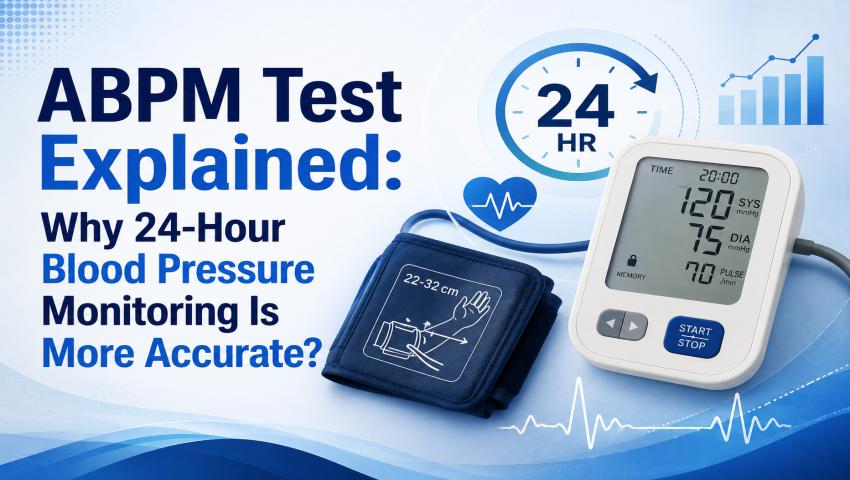
Monitoring your heart health is one of the most essential steps toward long-term wellness. If your doctor suspects your blood pressure fluctuates unpredictably, they may recommend an ABPM test. ABPM Test Explained can help you understand why 24-hour monitoring is important.
Standard clinic checks offer only a quick snapshot of your heart health. In contrast, an ABPM test for blood pressure delivers a full 24-hour picture of how your heart performs throughout the day and night.
If you are looking for an ABPM test in Pune or consulting a trusted Heart Specialist in Pune, understanding how this simple test works will help you take complete control of your cardiovascular health.
What Is an ABPM Test?
The full form of an ABPM test is Ambulatory Blood Pressure Monitoring. What is an ABPM test exactly? It is a non-invasive diagnostic procedure that records your blood pressure at regular intervals over a 24-hour period while you continue your routine daily life.
Unlike a single reading taken in a doctor’s clinic, wearing a 24-hour blood pressure monitor captures real-time changes during work, exercise, relaxation, and sleep.
How Does 24-Hour Blood Pressure Monitoring Work?
The ABPM test procedure is completely painless and user-friendly:
- Fitting the Device: A comfortable cuff is wrapped around your arm and attached to a lightweight monitor worn on your waist or shoulder belt.
- Automatic Readings: The device inflates automatically every 15 to 30 minutes during the day, and every 30 to 60 minutes at night.
- Daily Activity Log: You keep a quick diary of your activities, sleep times, and any symptoms like sudden dizziness.
- Data Analysis: After 24 hours, your doctor downloads the recorded data to analyze your pressure trends.
Consulting an experienced Chest Pain Specialist in Pune ensures that your continuous monitoring results are expertly evaluated for an accurate diagnosis.
Why Is an ABPM Test More Accurate Than a Regular Blood Pressure Check?
A single blood pressure reading can sometimes be misleading due to temporary stress or fatigue. An ABPM test offers superior accuracy by addressing key patterns:
- Eliminates White Coat Hypertension: Many people feel nervous at a clinic, causing artificially high readings. ABPM tracks your true pressure at home.
- Detects Masked Hypertension: Some patients show normal clinic readings, yet their blood pressure spikes during routine daily tasks.
- Monitors Night-Time Pressure: Normal blood pressure naturally dips during sleep. ABPM detects if your pressure stays dangerously elevated overnight.
- Provides Real-World Insights: It reveals how physical effort, daily stress, and current medicines impact your heart all day long.
Who Should Get an ABPM Test?
A Heart Doctor in Pune may recommend this 24-hour test if you fall into any of these categories:
- You have borderline or inconsistent blood pressure readings at the clinic.
- Your current blood pressure medications do not seem to be working properly.
- You experience unexplained headaches, fatigue, or fainting spells.
- You are pregnant and showing signs of gestational hypertension or preeclampsia.
- You manage conditions like diabetes, kidney disease, or a history of heart issues.
If you are searching for an ABPM test near me, scheduling a consultation with an experienced specialist is your best next step.
What Conditions Can an ABPM Test Detect?
An ABPM test is a powerful diagnostic tool for revealing complex heart conditions:
- White Coat Hypertension: High pressure occurring only inside a medical clinic.
- Masked Hypertension: Normal clinic results that mask dangerously high real-world pressure.
- Nocturnal Hypertension: Elevated blood pressure during sleep, which raises the risk of stroke.
- Resistant Hypertension: High blood pressure that resists multiple prescription medications.
- Hypotension: Sudden drops in blood pressure that cause dizziness or blackouts.
Comprehensive Cardiac Evaluation: Beyond ABPM
While an ABPM test evaluates continuous blood pressure trends, a complete heart check-up often involves complementary diagnostic procedures. Depending on your symptoms, your cardiologist may suggest:
- Echocardiography in Pune: An ultrasound of the heart to check its structure and pumping efficiency.
- Stress Test in Pune: An evaluation of how your heart performs under physical exertion or treadmill exercise.
- Angiography in Pune: An imaging technique used to visualize blockages in your coronary arteries.
- If significant blockages are identified, procedures like Angioplasty in Pune may be recommended by an expert Interventional Cardiologist in Pune to restore proper blood flow.
Benefits of an ABPM Test:
Investing 24 hours in continuous monitoring offers clear medical advantages:
- Prevents Over-Medication: Stops you from taking unneeded high blood pressure pills due to temporary clinic stress.
- Optimizes Treatment Timing: Shows your cardiologist the exact time of day you should take your medication.
- Precise Risk Evaluation: Gives a complete, long-term assessment of your blood vessel and heart health.
- Peace of Mind: Provides an accurate diagnosis based on your natural daily environment.
How to Prepare for an ABPM Test?
Getting ready for your test is simple:
- Wear Loose Clothing: Choose short sleeves or loose tops so the cuff fits comfortably.
- Stay Calm During Inflation: When you feel the arm cuff tighten, keep your arm relaxed and steady at heart level.
- Keep the Unit Dry: Avoid baths or showers during the 24 hours, as the electronic monitor must stay dry.
- Maintain Your Routine: Follow your regular daily routine without avoiding typical daily activities.
- Track Your Activities: Keep a brief note of when you eat, sleep, work, or take your medicines.
ABPM Test at Dr. Kartik Bhosale Cardiology Clinic:
For a reliable ABPM test in Pune, receiving care from a highly qualified cardiology specialist makes all the difference in diagnosis and comfort.
At Dr. Kartik Bhosale Cardiology Clinic, patients receive advanced cardiac diagnostic care under Dr. Kartik Bhosale, recognized as the Best Cardiologist in Pune and a top Interventional Cardiologist in Pune.
About Dr. Kartik Bhosale:
- Completed MBBS from the prestigious Seth G. S. Medical College and KEM Hospital, Mumbai.
- Earned his MD in Medicine and DM in Cardiology from PGIMER, Dr. Ram Manohar Lohia Hospital, New Delhi, securing a GOLD MEDAL in Cardiology.
- Completed DrNB (Cardiology) from the National Board of Examinations, New Delhi.
- Active member of the Cardiological Society of India (MCSI), National Academy of Medical Sciences (MNAMS), and the Society for Cardiovascular Angiography and Interventions (AMSCAI).
If you wish to know more about the abpm test price or abpm test charges, the clinic offers transparent and affordable diagnostic options tailored to your clinical needs.
Conclusion:
An ABPM test is one of the most accurate diagnostic methods available to detect and manage blood pressure issues. By capturing continuous 24-hour readings, it removes guesswork, prevents wrong diagnoses, and helps create a personalized treatment plan.
If you suspect fluctuating blood pressure or require an expert cardiac evaluation, consult Dr. Kartik Bhosale, trusted as the Best Cardiologist in Pune, to protect your long-term heart health.
Frequently Asked Questions (FAQs):
An ABPM (Ambulatory Blood Pressure Monitoring) test is a non-invasive procedure where you wear a small monitor for 24 hours to track blood pressure during daily routine activities and sleep.
It takes dozens of automatic readings over 24 hours in your natural environment, eliminating false spikes caused by doctor’s office anxiety (white coat hypertension).
It is recommended for people with fluctuating readings, unmanaged high blood pressure, unexplained dizziness, or underlying conditions like diabetes and kidney disease.
Wear loose-fitting clothing, keep your arm still when the cuff inflates, keep the monitor dry, and carry on with your normal daily routine.
No, it is completely painless. You will only feel a gentle squeeze around your arm for a few seconds each time the cuff inflates to take a reading.