


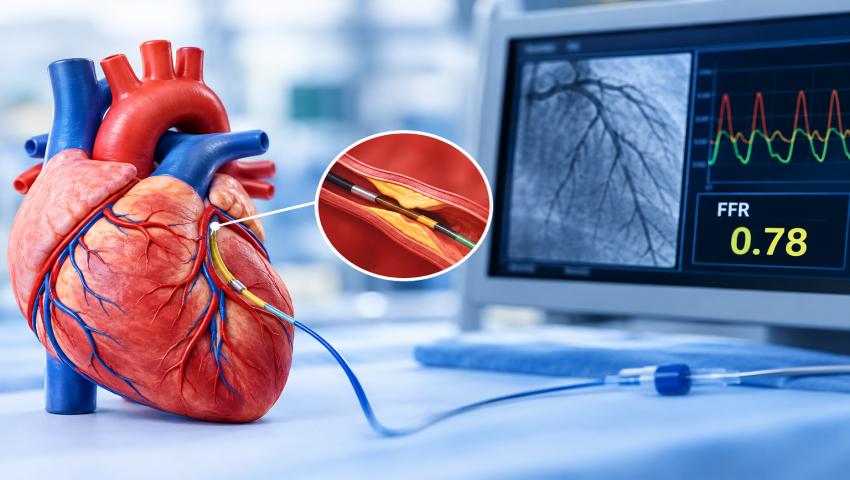
Heart health issues are increasing rapidly across India. When you visit a Heart Doctor in Pune for unexplained chest discomfort, understanding what FFR is in cardiology can help you navigate your diagnostic options. Typically, doctors recommend an Angiography in Pune to check for narrowings in your blood vessels. However, a standard angiography only provides a visual snapshot—it cannot always prove whether a blockage is actively restricting blood flow to your heart muscle.
Fractional Flow Reserve (FFR) helps your cardiologist decide whether you truly need an Angioplasty in Pune or if medical therapy is sufficient.
What Is FFR in Cardiology?
FFR stands for Fractional Flow Reserve.
It is a specialized, wire-based diagnostic procedure performed inside your heart’s blood vessels. Instead of relying solely on visual images, the FFR test for heart evaluation measures the exact blood pressure before and after a blockage. This precise numerical reading tells doctors whether a narrowing is dangerous or harmless.
Why Is FFR Used to Identify Heart Blockages?
Not every heart blockage requires a stent. Some narrowings look significant on pictures, but blood still flows through them easily.
Here is why doctors recommend FFR testing during cardiac evaluation:
- Clear Decisions: Replaces visual estimation with accurate pressure measurements.
- Avoids Unnecessary Stents: Prevents unneeded stent placement if blood flow remains safe.
- Cost-Effective: Saves patients from paying for avoidable invasive procedures and long-term extra medications.
- Better Patient Outcomes: Focuses invasive treatments only on blockages that pose a true health risk.
How Is the FFR Test Performed?
The FFR test procedure is straightforward and is usually conducted right after a regular angiography in the Cath Lab.
- Local Anesthesia: The doctor numbs your wrist or groin area.
- Catheter Insertion: A flexible tube is guided into the heart’s main arteries.
- Pressure Wire Placement: A micro-wire equipped with a sensor passes through the blockage.
- Blood Flow Measurement: The sensor compares blood pressure after the blockage to the pressure before
The entire procedure adds only a few extra minutes to your diagnostic session.
Non-Invasive Heart Tests Before FFR:
Before undergoing invasive evaluation, patients experiencing chest discomfort are evaluated using non-invasive diagnostic tools. If you visit a Chest Pain Specialist in Pune, they may first perform:
- Echocardiography in Pune / 2D Echo Test in Pune to evaluate heart muscle movement and valve function.
- Stress Test in Pune to evaluate how your heart performs under physical exertion.
If non-invasive tests indicate potential issues, FFR is used during angiography to pinpoint exact blockage severity.
Understanding FFR Test Values:
The FFR score is recorded as a decimal ratio compared to a normal value of 1.0.
- Above 0.80: Blood flow is healthy. Treatment usually involves medications and lifestyle adjustments.
- 80 or Below: Blood flow is significantly restricted. Stent placement or bypass surgery is recommended.
FFR vs. Angiography: The Main Difference
- Coronary Angiography: Shows the structure (a visual snapshot of where a blockage exists).
- FFR Test: Measures the function (how much blood is actively passing through).
Expert Care from the Best Cardiologist in Pune: Dr. Kartik Bhosale
15
Years of Experience
10,000+
Cardiac Evaluations
10, 000+
Happy Patients
10+
Advanced Procedures
Making the right decision about stents and invasive procedures requires expert guidance. If you are looking for an experienced Interventional Cardiologist in Pune or a reliable Cardiologist in Wakad, consulting a qualified expert ensures accurate diagnosis and treatment.
Dr. Kartik Bhosale is widely recognized as the Best Cardiologist in Pune. He completed his MBBS from Seth G. S. Medical College and KEM Hospital, Mumbai, followed by MD Medicine and DM Cardiology from PGIMER, Dr. Ram Manohar Lohia Hospital, New Delhi, securing a GOLD MEDAL in Cardiology.
He holds a DrNB in Cardiology and is an active member of MCSI, MNAMS, and AMSCAI. At his Cardiology Clinic in Wakad, patients receive advanced diagnostic services—including 2D Echo Test in Wakad—as well as specialized interventions like Pacemaker Implantation in Pune.
FFR FAQs: Common Questions Answered
Yes. An FFR reading proves whether a blockage is genuinely cutting off blood supply. If the score is above 0.80, your Interventional Cardiologist in Pune can safely treat you with medications instead of placing a stent.
You should consult an experienced Heart Doctor in Pune or an expert Heart Specialist in Pune who is trained in advanced catheterization lab techniques.
Yes, FFR is usually performed right after a standard Angiography in Pune if the visual report shows an intermediate or questionable blockage.
Yes, the Best Cardiologist in Pune uses FFR as the international gold standard to ensure that patients get stents only when medically necessary.
Conclusion:
Understanding what FFR is in cardiology helps you make informed healthcare decisions. By measuring actual blood pressure inside your arteries, the FFR test ensures you receive a stent only when it is truly necessary for your long-term heart health.
Take Charge of Your Heart Health Today
If you or a loved one are advised to undergo an angiography or stent procedure, seek expert guidance from Dr. Kartik Bhosale at his clinic in Wakad, Pune.
Book an Appointment Today for accurate heart diagnosis and personalized cardiac care.